

Whether it’s water rescue robots, inspection robots, humanoid robots, or commercial service robots, robotics companies face the exact same challenge:
How to accelerate design verification, achieve lower-cost iterations, and compress the cycle from concept to real-world deployment without compromising product performance?
When developing large structural components for robots, traditional manufacturing methods invariably run into high tooling costs, long lead times, and difficult engineering changes.
Faced with these bottlenecks, Corewave Dynamics—a robotics pioneer from Portugal—turned to CreatBot’s large-format industrial FFF 3D printing solution.
“In water rescue operations, time is life. With CreatBot’s D1000 Pro HS and D600 Pro3 HS, we cut our water rescue robot’s prototype RD cycle by 70% while directly printing a full-scale hull with injection-molded strength.”
Client Background & Project Challenges
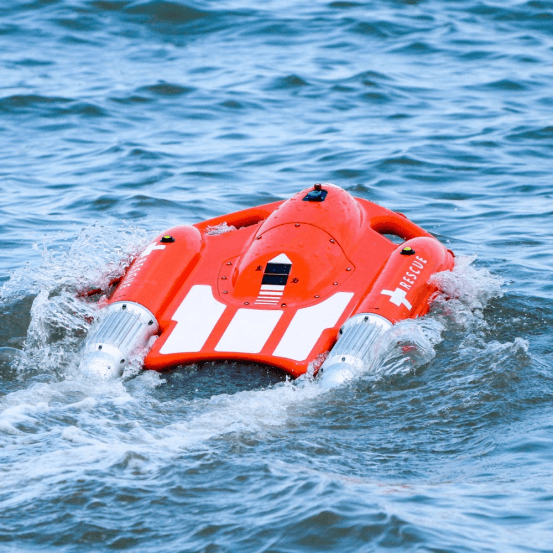
Corewave Dynamics is a tech firm specializing in high-reliability marine engineering and intelligent robotics. Their latest water rescue robot is designed for maritime search and rescue as well as emergency response in harsh water conditions.
During early product development and pre-mass production, the Corewave team faced four critical challenges in manufacturing the robot's hull:
- Massive Dimensions: The hull measures nearly 1 meter long. Standard small/mid-sized 3D printers require splitting the model into multiple parts, which severely compromises waterproofing and structural integrity.
- Extreme Environmental Demands: Operating at high speeds in seawater requires the hull to feature superior impact resistance, IP-grade watertight sealing, and anti-salt-spray corrosion resistance.
- Prohibitive Tooling Costs: The hull features complex fluid-dynamic geometry. Tooling for large-scale injection molding costs tens of thousands of euros, making prototype iterations financially unfeasible.
- Tight Delivery Deadlines: Traditional tooling or CNC machining takes months, excessively dragging out the RD timeline.
Solution: Dual-Machine Collaborative Printing
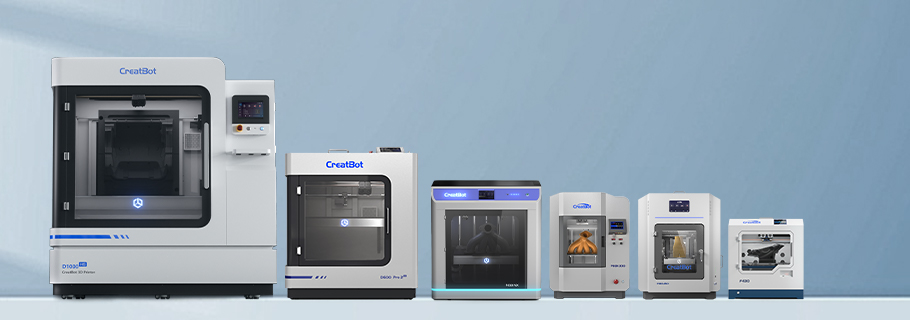
To meet Corewave Dynamics’ stringent standards, CreatBot provided a hybrid large-format FFF printing solution combining the D1000 Pro HS and D600 Pro3 HS.
| Manufacturing Requirements | Traditional Solutions (Tooling / CNC) | CreatBot D1000 Pro HS & D600 Pro3 HS |
|---|---|---|
| Prototyping / Lead Time | 6 to 8 weeks | Only 3 to 5 days |
| Tooling Machining Cost | Exorbitantly high (tens of thousands of €) | 80%+ reduction in manufacturing costs |
| Structural Integrity | Segmented assembly, prone to leaks cracks | 1050 x 1050 x 1050mm build volume; seamless, waterproof |
| Material Flexibility | Limited plastic molding options | Direct printing with high-strength engineering plastics (PET-CF/ASA) |
Application Process: Reshaping Robot RD and Manufacturing Workflows
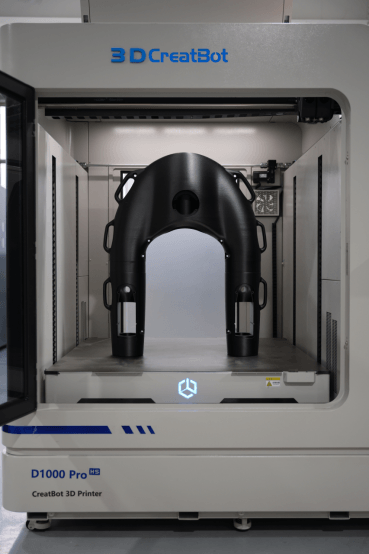
Segmented assembly is a fatal weakness in robot hull manufacturing—joints act as natural failure points for water ingress and structural fracture under severe impact.
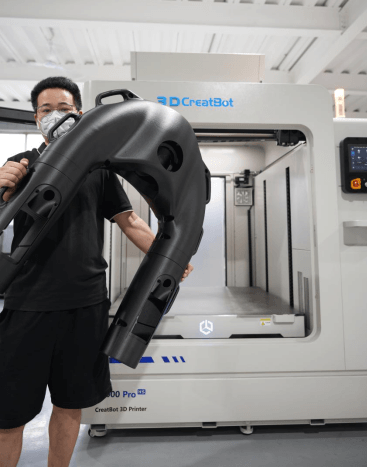
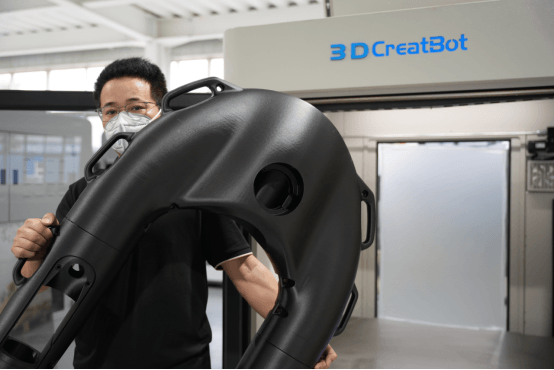
The D1000 Pro HS features a 1050 x 1050 x 1050mm build volume that eliminates mechanical splitting entirely. Corewave Dynamics printed the nearly 1-meter-long main hull in a single, monolithic piece. This seamless structure, paired with excellent water tightness, delivers unyielding structural rigidity against high-pressure wave impacts and complex underwater hydrodynamics.
Standard PLA or ABS materials fall far short of the strength needed for maritime rescue scenarios.
CreatBot printers feature high-temperature all-metal extruders and an active heated chamber (Chamber Heating), fully supporting carbon-fiber-reinforced materials (e.g., PET-CF) and high-weatherability polymers (e.g., ASA). This ensures strong intermolecular bonding during printing, giving the final part high thermal stability and superior salt-spray corrosion resistance. The printed hull remains lightweight while effortlessly withstanding dozens of kilograms of impact force.
Optimizing the robot’s hydrodynamic hull requires multiple rounds of water basin testing and fine-tuning. Modifying a traditional mold used to take weeks; today, powered by CreatBot’s new-generation High-Speed (HS) technology, printing cycles are compressed into days without losing industrial precision. The Corewave team can tweak fluid surfaces in CAD today and test a newly printed physical hull in the water tomorrow—drastically accelerating time-to-market.
Results & Business Impact
Workflow:
- 3D Model Design
- Monolithic Printing (D1000 Pro HS / D600 Pro3 HS)
- Assembly & Waterproof Testing
- Real-World Sea Trial & Rescue
Using CreatBot’s industrial 3D printing solution, Corewave Dynamics successfully built a commercial-grade water rescue robot prototype:
- 82% Reduction in RD Costs: Avoided costly fiberglass or injection molding fees.
- 400% Faster Iteration Speed: Re-printed parts on the same day after modifying CAD designs.
- Lightweight yet Ultra-Strong: Utilized internal honeycomb infill structures to drastically reduce overall robot weight and boost battery range while retaining high impact resistance.
Video: Watch the water rescue robot demo on YouTube
How Large-Format Industrial 3D Printing Transforms the Robotics Industry
With the explosion of AI hardware and robotics—from embodied humanoids and industrial AGVs/AMRs to autonomous air, sea, and land vehicles—“large-scale, complex geometry, low-volume, and rapid iteration” has become a universal RD challenge across the sector.
Large-format industrial FFF 3D printing reshapes robotics manufacturing across three core dimensions:
- Restructuring RD Economics (Eliminating Tooling Risks): Traditional RD suffers when a single mold design error wastes months and tens of thousands of dollars. Large-format 3D printing reduces trial-and-error risk to zero, allowing engineers to boldly experiment with advanced topological structures and fluid dynamics.
- Unlocking Flexible Manufacturing (Agile Low-Volume Production): Specialized robots (e.g., underwater rescue, high-altitude inspection, firefighting) are high-value, low-to-medium volume products. 3D printing enables zero-inventory, on-demand production without setting up traditional assembly lines, significantly reducing capital lockup.
- Enabling Lightweighting & Functional Integration: By taking advantage of internal infill patterns and integrated internal ducting, 3D printing achieves lightweighting that traditional subtractive manufacturing (CNC) simply cannot match—directly enhancing robot payload, responsiveness, and battery life.
Empowering the Robotics Sector: From Concept to Full-Scale Production
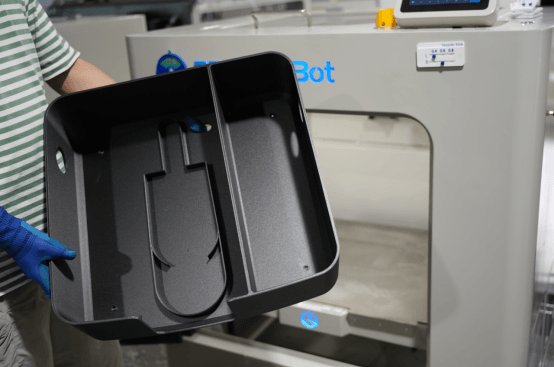
Beyond water rescue robots, CreatBot’s large-format industrial FFF 3D printers (D600 series / D1000 series) are widely deployed across various robotic verticals:
- Humanoids / Embodied AI: Exoskeleton shells, lightweight one-piece torso structures.
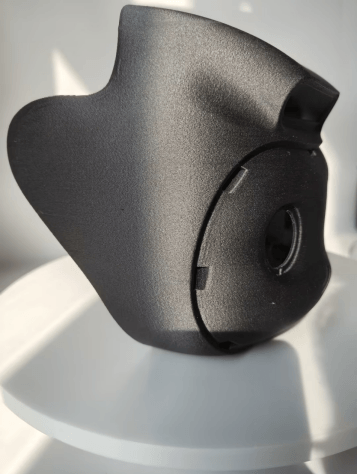
- Inspection Robots: All-weather protective covers, sensor-integrated enclosures, dustproof and waterproof structural parts.
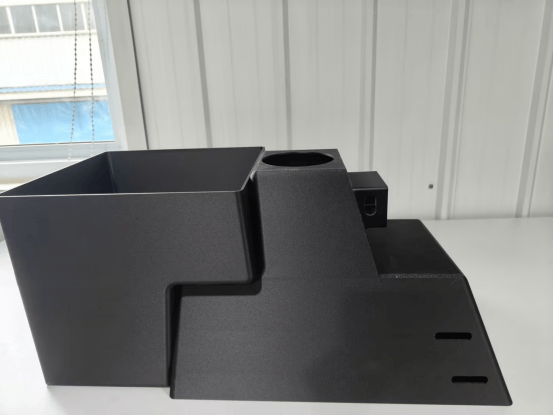
- AGV / AMR Industrial Robots: Large chassis fairings, custom assembly jigs, fixtures, and protective covers.
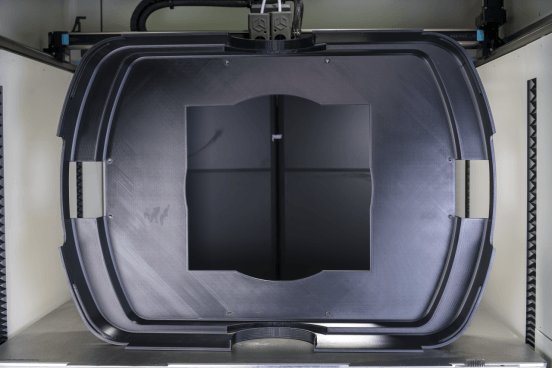
- Delivery Service Robots: Sleek curved outer panels, multi-tier integrated tray structures.
💡 Developing large-scale robots, drones, or automated machinery?
Reach out to the CreatBot Industrial 3D Printing Team! Send your 3D models to our engineers for a free printability evaluation and manufacturing cost analysis.