
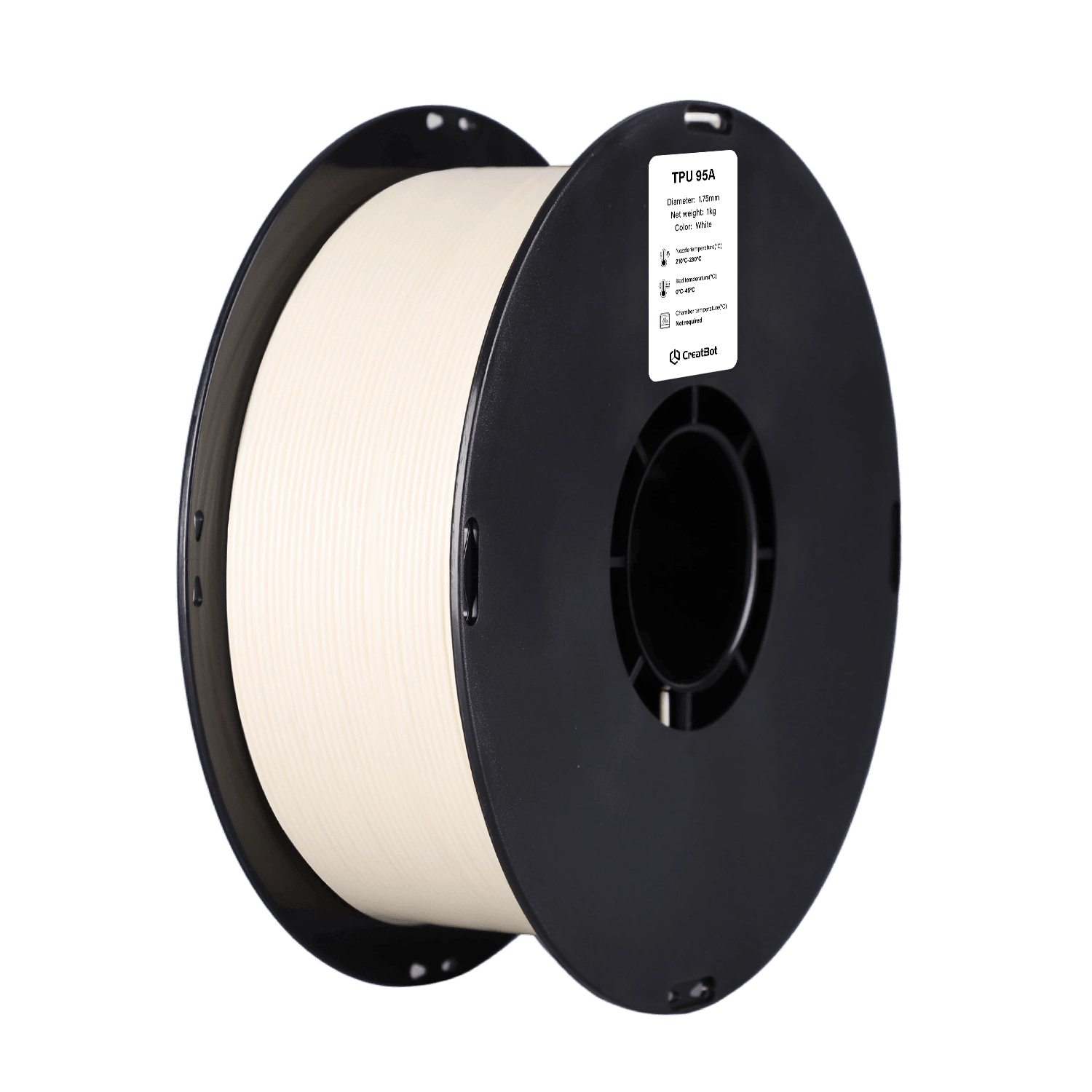
TPU 95A
CreatBot TPU 95A Filament Applications

Seals & Gaskets

Hoses & Pipes

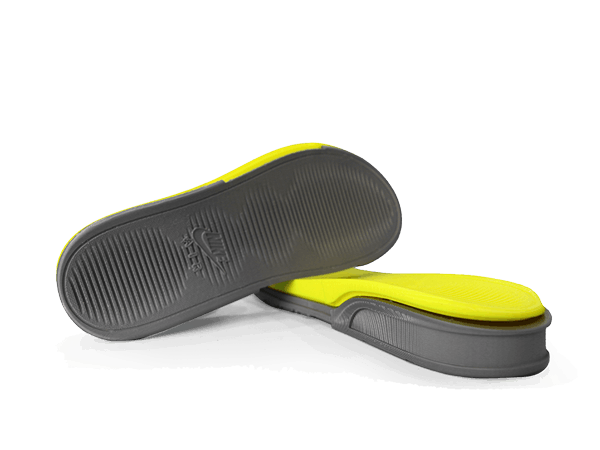
Footwear Midsoles

Wearable Devices
TPU 95A 3D Printing Filament Features



CreatBot TPU 95A Print Preview
Advantages of Printing with CreatBot Filaments
Premium Raw Material Quality
Selected from first-tier chemical companies' native TPU resin, ensuring material purity and consistency from the source. Every batch undergoes full inspection of hardness, tensile strength, and melt index before leaving the factory, ensuring stable and reliable performance.
Factory Calibrated, Ready to Print
Filament formulation, melt flow, and diameter tolerance (±0.03mm) calibrated for all CreatBot printer models, with built-in dedicated parameters in slicing software. No repeated tuning needed, ready to use out of the box, even beginners can achieve stable print quality.
High Elasticity & Wear Resistance
TPU 95A offers excellent elastic recovery, abrasion resistance, and oil resistance with high elongation at break, ideal for seals, dampers, flexible hinges, and elastic functional parts.
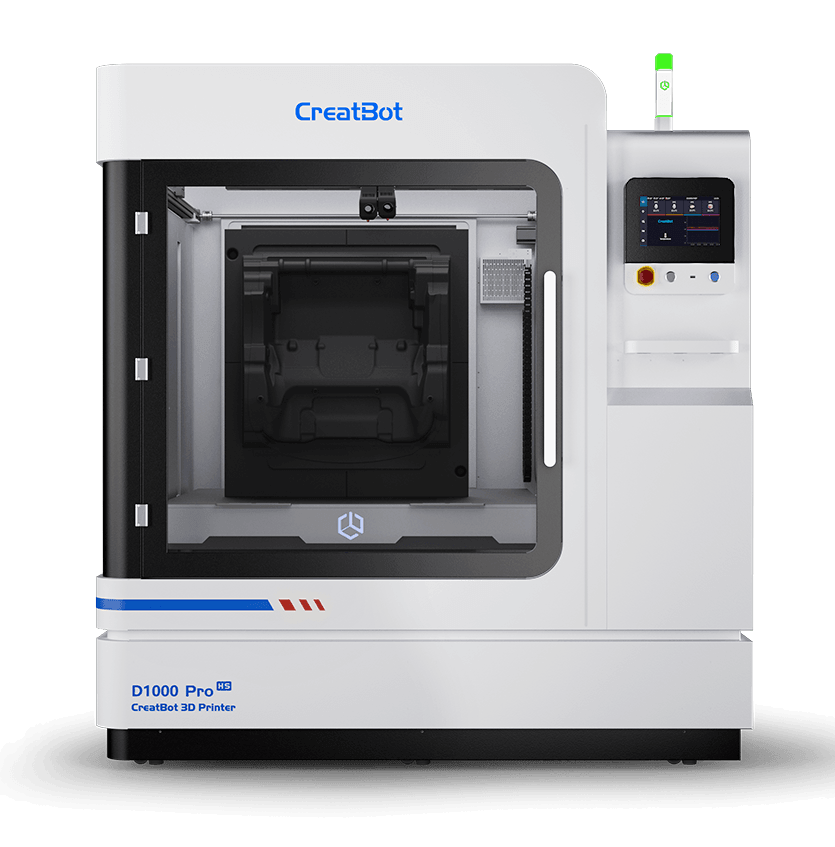
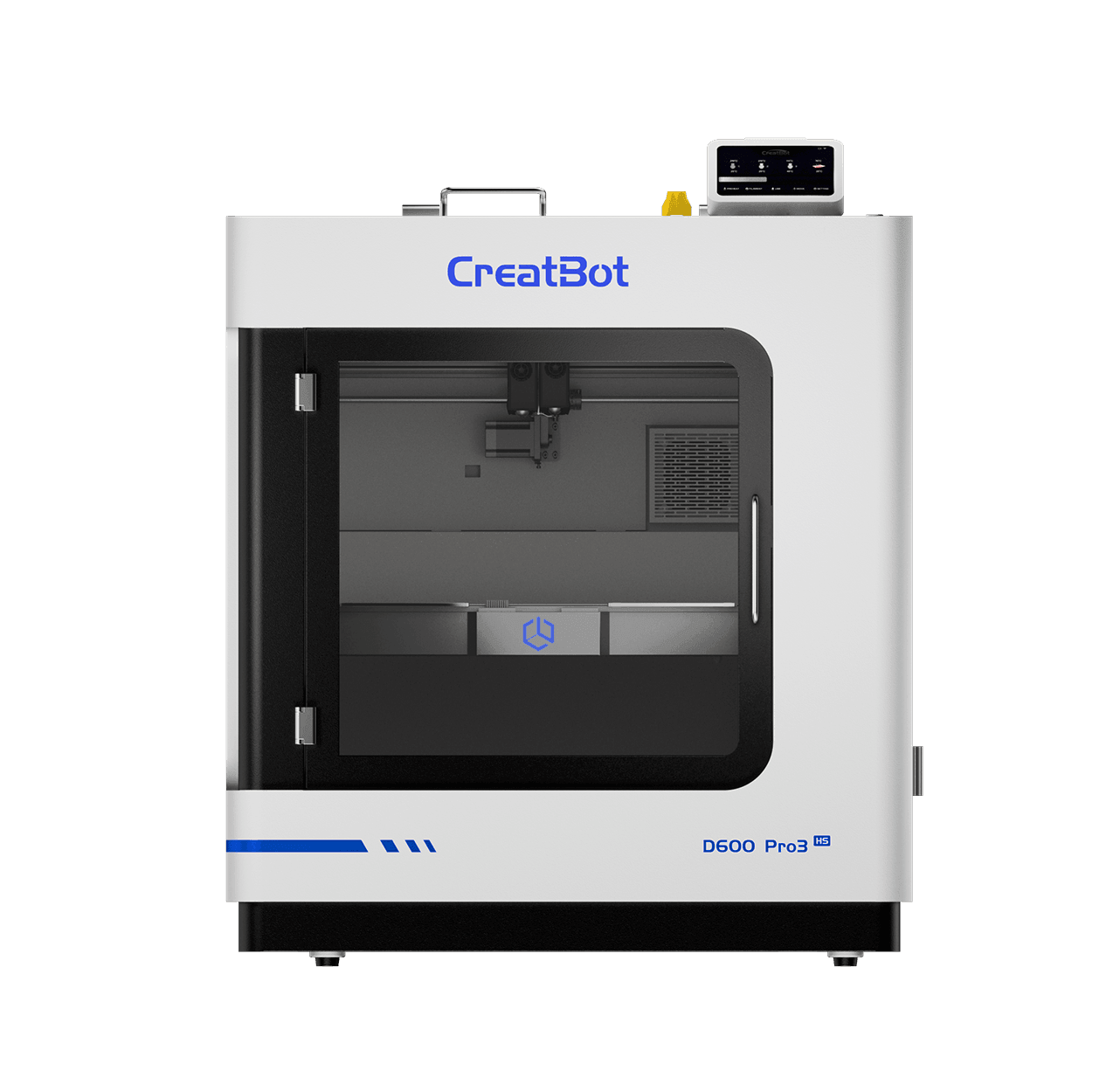
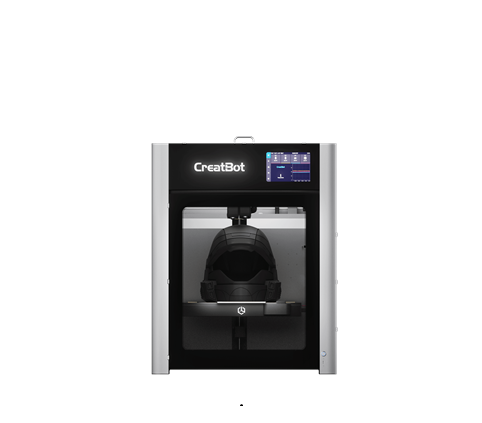
Supported 3D Printers
CreatBot industrial 3D printers are designed for high-performance materials. The following models feature heated chambers and high-temperature nozzles for professional-grade results.
Technical Data Sheet
| Physical Properties | Test Method | Data |
|---|---|---|
| Density | ISO1183 | 1.15g/cm³ |
| Hardness | ISO 7619 | 95A |
| Melt Flow Index | 200℃,2.16 kg | 30g/10 min |
| Melting Temperature | DSC,10℃/min | / |
| Vicat Softening Temperature | ISO 306,GB/T 1633 | 99℃ |
| Rebound Resilience | ASTM D2632 | 28% |
| Mechanical Properties | Test Method | Data |
|---|---|---|
| Tensile Break Strength XY | ISO 37 | 31 MPa |
| Elongation at Break XY | ISO 37 | 471% |
| 100% Modulus of Elasticity XY | ISO 37 | 9.75 MPa |
| 200% Modulus of Elasticity XY | ISO 37 | 12.2 MPa |
| 300% Modulus of Elasticity XY | ISO 37 | 17.0 MPa |
| Recommended Print Parameters | |
|---|---|
| Drying Conditions Before Printing | 70‑80℃,6‑8 H (air blast drying oven) |
| Nozzle Temperature | 210‑230℃ |
| Nozzle Diameter | 0.4 / 0.6 / 0.8 / 1.0 mm |
| Print Bed Surface Treatment | 3D Printing Spray / PVP Glue Stick / Specialized Adhesive |
| Print Bed Temperature | 20‑50℃ |
| Chamber Temperature | / |
| Cooling Fan | ON |
| Print Speed | 30‑120 mm/s |
TPU 95A Filament FAQ
TPU 95A is an elastomer material, fundamentally different from PLA and ABS: 1) Compared to PLA/ABS: TPU has extremely high elasticity (elongation at break over 600%), can be repeatedly bent without deformation, and has excellent impact resistance; 2) Application scenarios: PLA and ABS are suitable for rigid parts, while TPU is suitable for flexible parts like seals, gaskets, hoses, footwear, etc.; 3) Printing difficulty: TPU printing speed is slower and requires parameter adjustments. Selection advice: Choose PLA or ABS for parts requiring rigidity and strength; choose TPU 95A for parts requiring elasticity, flexibility, and wear resistance.
TPU 95A printing requires strict control of the following parameters: 1) Drying: Recommended to dry at 70-80°C for 6-8 hours before printing to remove moisture and avoid bubbles and strength reduction; 2) Nozzle temperature: 210-230°C, too low causes poor layer adhesion, too high causes degradation; 3) Print speed: 30-120mm/s, TPU has high elasticity, too fast can cause extrusion instability; 4) Cooling fan: Turn on appropriate cooling to improve overhang performance; 5) Retraction settings: Recommended retraction distance 1-3mm, speed 20-40mm/s, excessive retraction can cause clogging; 6) Print bed: 20-50°C, use masking tape or special glue to enhance adhesion; 7) Path planning: Avoid long-distance travel to reduce stringing.
TPU 95A is suitable for all CreatBot 3D printers, but printers with direct drive extruders are recommended: 1) Desktop: F430, D400, etc., direct drive design is more suitable for flexible material printing; 2) Industrial: D600 Pro3 HS, D1000 HS, etc., suitable for large-scale flexible part production. Prerequisites for using TPU: Nozzle temperature must reach above 210°C, equipped with heated bed function (20-50°C). For printers with remote extruders, retraction settings need to be adjusted and print speed reduced.
TPU 95A needs proper storage. Correct storage methods: 1) Unopened material: Store directly in a dry, cool place, avoid direct sunlight; 2) Opened material: Use sealed bags or dry boxes for storage, desiccant recommended; 3) Pre-printing treatment: Even if the material looks dry, it is still recommended to dry at 70-80°C for 6-8 hours to fully remove moisture and ensure optimal print quality; 4) Post-printing parts: Although TPU has low water absorption, long-term exposure in high humidity environments will still affect its mechanical properties, sealed storage or use in dry environments is recommended.
TPU 95A is suitable for printing various types of flexible parts, typical applications include: 1) Seals: O-rings, oil seals, gaskets, etc., with excellent oil and wear resistance; 2) Hoses and pipes: Flexible pipes, connection pipes, corrugated pipes, etc., with good elastic recovery; 3) Footwear: Sports shoe midsoles, insoles, protective cases, etc., combining comfort and durability; 4) Wearable devices: Bracelets, watch bands, phone cases, etc., with good flexibility and touch feel; 5) Industrial accessories: Shock-absorbing pads, foot pads, buffer blocks, etc., with excellent impact resistance; 6) Automotive parts: Dust covers, shock blocks, weather strips, etc., with good oil and temperature resistance.
TPU 95A has good temperature resistance: 1) Vicat softening temperature: 99°C; 2) Rebound resilience: 28%; 3) Compared to PLA/ABS: TPU has lower temperature resistance than ABS, but its low-temperature performance is far superior to PLA and ABS; 4) Application scenarios: Suitable for automotive interiors, outdoor equipment, industrial accessories, and other scenarios requiring high-low temperature cycling.
TPU 95A printed parts can undergo the following post-processing: 1) Support structure removal: Use diagonal cutters or craft knives to remove supports, TPU has high elasticity, avoid excessive stretching and deformation; 2) Surface treatment: TPU surface sanding is difficult, it is recommended to use sandpaper (80-120 grit) for light sanding, or use polishing paste for polishing; 3) Annealing: Annealing is not recommended, high temperatures will change TPU hardness and other properties; 4) Bonding: Special TPU glue or hot melt adhesive can be used for bonding; 5) Dyeing: TPU can be dyed with special dyes, but the dyeing effect varies by material; 6) Post-curing: TPU parts can be placed at room temperature for 24 hours to achieve optimal performance.
TPU is divided into various specifications by Shore hardness, common ones include 85A, 90A, 95A, 98A, etc.: 1) 85A-90A: Very soft, similar to rubber, suitable for phone cases, protective cases, and other scenarios requiring high flexibility; 2) 95A: Medium hardness, combining flexibility and support, the most commonly used general-purpose TPU, suitable for seals, footwear, hoses, etc.; 3) 98A: Higher hardness, close to plastic, suitable for scenarios requiring certain rigidity but still needing elasticity. Selection advice: Choose 85A-90A for soft touch and high elasticity; choose 95A for balanced flexibility and support; choose 98A for higher hardness but still needing elasticity. CreatBot TPU 95A is the most versatile specification, suitable for most application scenarios.
More Materials
Contact Us


Message
Application Fields
Quick Links
